
Ethiopia heads into election seen as one of its least competitive in decades
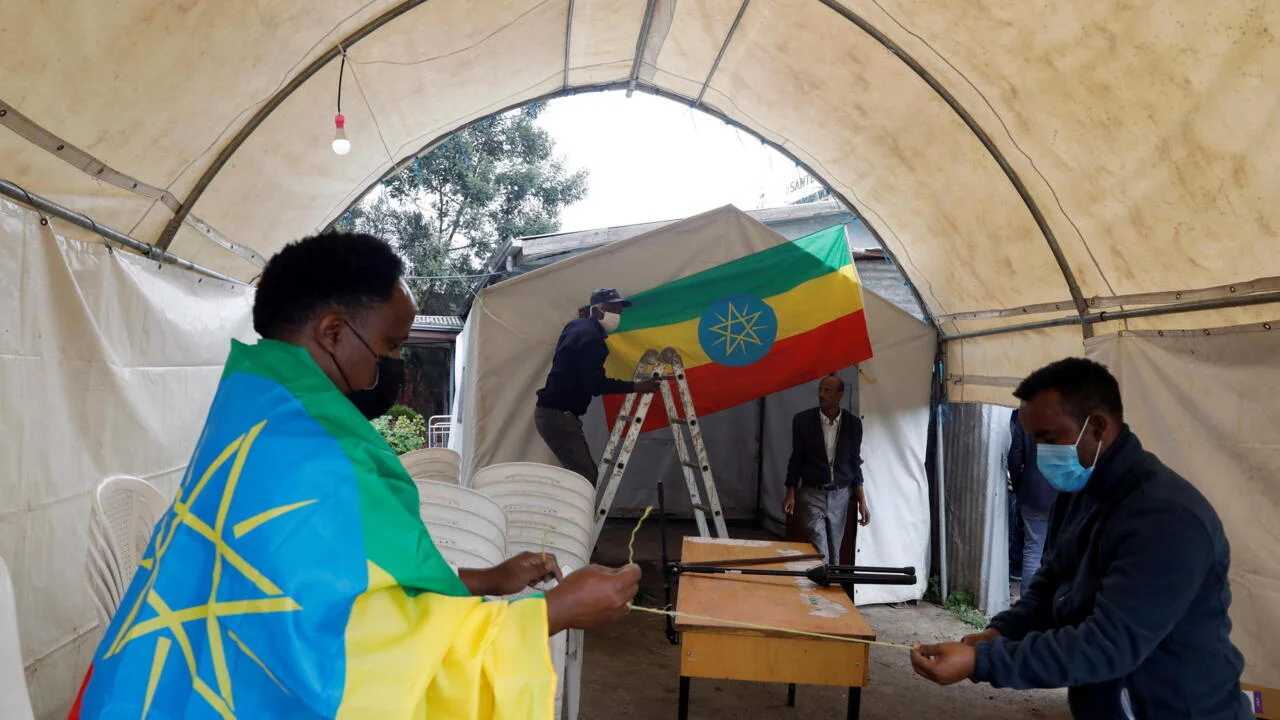
Ethiopia will hold a general election on June 1, with Prime Minister Abiy Ahmed widely expected to secure another term despite armed conflicts, political repression and mounting economic pressure.
Abiy has led Ethiopia since 2018, when he came to power promising political reform and reconciliation. He later won the Nobel Peace Prize for restoring relations with Eritrea.
But rights groups and analysts say his government has since returned to authoritarian practices, with crackdowns on opposition figures, civil society groups and journalists.
His ruling Prosperity Party won a landslide victory in the last general election in 2021, taking 485 of the 502 contested seats.
That vote was partly disrupted by the civil war between the federal government and leaders of the northern Tigray region, a conflict estimated to have killed around 600,000 people.
Opposition weakened and fragmented
Although 23 parties are registered for the June vote, analysts say most are either close to the ruling party or too weak to mount a serious challenge.
Many major opposition figures are either in exile, imprisoned, reluctant to participate, or involved in armed movements.
“This election is going to be among the least competitive since multi-party democracy was introduced in 1991,” said Abel Abate Demissie of the Chatham House think tank.
Abiy himself has not prominently campaigned or even clearly confirmed his candidacy, but few observers doubt that he will remain in power.
Security crisis disrupts voting
The election is taking place against a worsening security backdrop.
Ethiopia’s two most populous regions, Oromia and Amhara, are facing long-running insurgencies. Voting has already been cancelled in 30 of Amhara’s 137 constituencies.
The Amhara militant group Fano has warned voters against participating, saying it would consider those involved in the election as complicit with the government.
Despite the deployment of around 500,000 federal soldiers and 30,000 police, analysts warn that armed groups could still disrupt the vote.
Voting will also not take place in Tigray, where around one million people remain displaced from the civil war and the dominant regional party, the Tigray People’s Liberation Front, remains at odds with the federal government.
Economy under pressure
Abiy has focused on gradually liberalising Ethiopia’s heavily controlled economy in an effort to attract investment.
The government has projected double-digit growth this year, but Ethiopia remains vulnerable to external shocks, particularly because of its heavy reliance on oil imports.
The economic fallout from the Middle East war has added further pressure through higher energy costs.
Landslide expected
Ethiopia has never experienced a fully free and competitive national election. In 2015, the then-ruling coalition won every parliamentary seat.
This year’s vote is expected to cost around 10 billion birr, or roughly $64 million, and will be held across about 49,000 polling stations in a country spanning more than 1.1 million square kilometres.
Despite the scale of the operation, the political outcome appears largely predictable.
Analysts expect another overwhelming victory for Abiy’s ruling party, reinforcing the dominance of the Prosperity Party at a time when Ethiopia remains divided by conflict, economic strain and unresolved questions over democratic reform.

The Nation Africa News Bureau is led by our editorial team, which closely observes political, economic, social, and cultural developments across the region. Through our network of correspondents and analysts, we monitor key events and emerging stories to provide timely, accurate, and relevant news coverage. Our mission is to bring the latest regional updates, in-depth reporting, and informed perspectives directly to our readers through our news website.


